
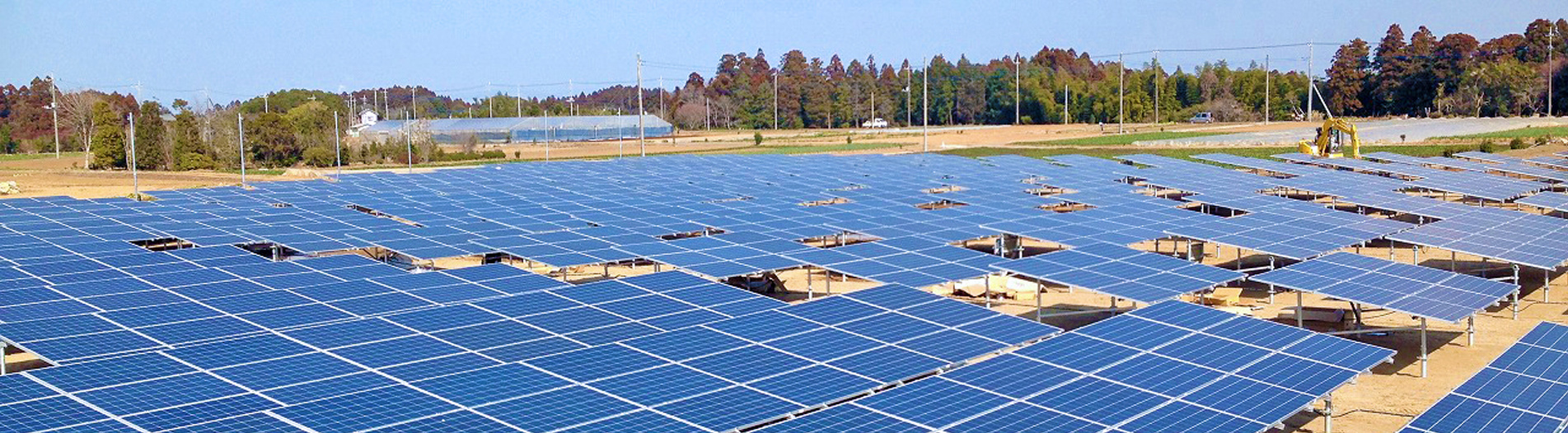
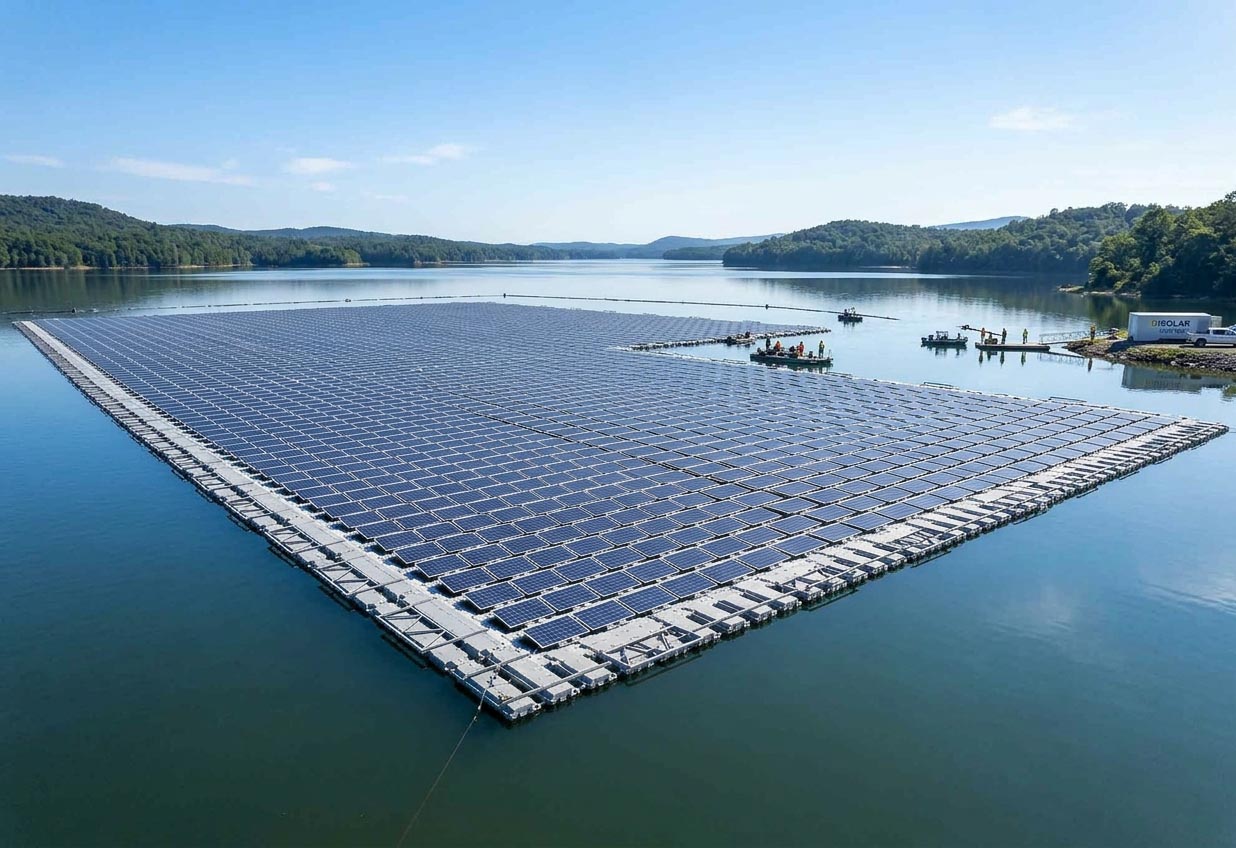
As land resources become increasingly scarce, solar energy development is expanding beyond terrestrial sites. Floating Photovoltaic (FPV) systems build solar power plants on lakes, reservoirs and ponds, opening up a brand-new track for clean energy.
Traditional ground-mounted solar farms consume large amounts of land. In land-constrained regions, land availability has become a major bottleneck for new energy projects. Floating PV installs solar arrays on floating platforms over water. Without occupying farmland or woodlands, it turns under-utilized water surfaces into power-generation assets and has gained rapid popularity across the global renewable-energy market.
Floating PV is far more than simply placing solar panels on water. It is a complete engineering solution consisting of HDPE float platforms, mounting structures and anchoring mooring systems.
The floating platform acts as the “water-borne foundation”. It is mostly made of high-density polyethylene (HDPE), featuring great corrosion resistance and UV resistance. Each floater delivers buoyancy above 150 kg. Modular floats can be assembled flexibly to match project water-surface size. Mounting components adopt aluminum alloy and Zn-Al-Mg coated steel, with SUS304 stainless-steel fasteners to resist corrosion in humid aquatic environments.
The anchoring system is critical to prevent the whole plant from drifting away under wind and waves.
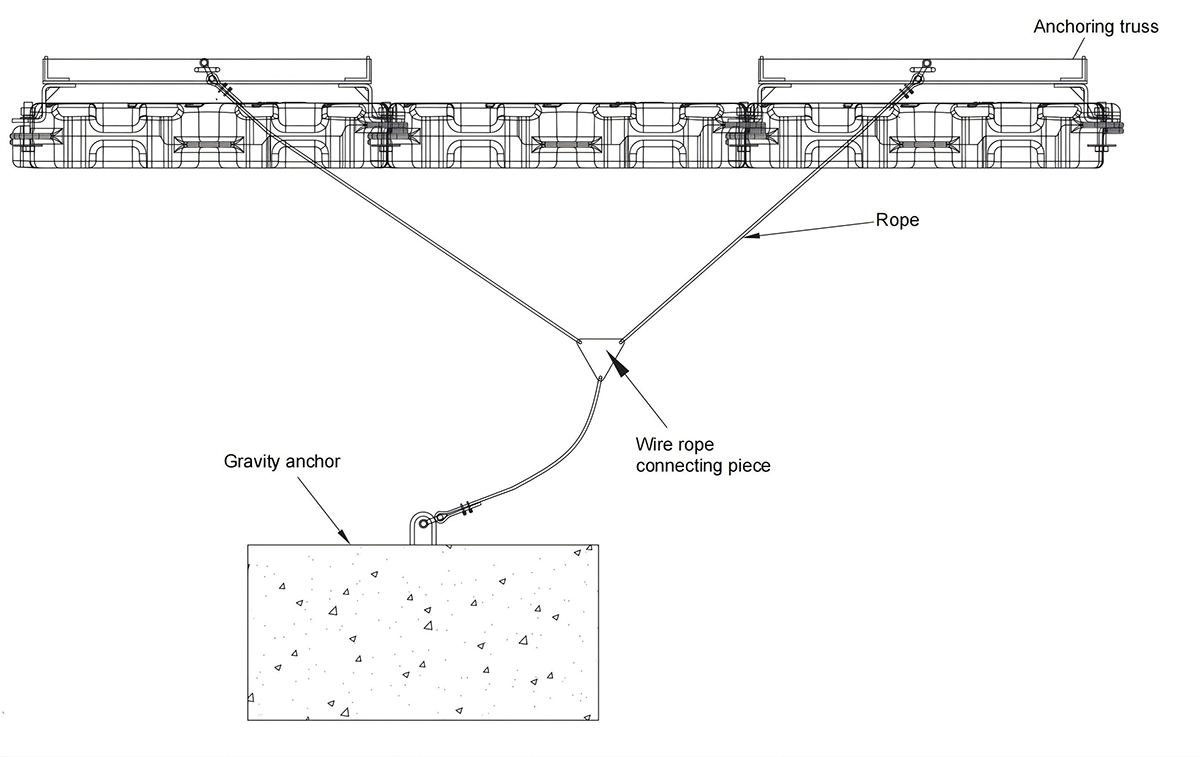
Solutions include anchoring trusses, ropes, wire-rope connectors and gravity anchors. Pile anchors, bank anchors and bottom anchors are also available for different site conditions. The mooring setup adapts to water-level fluctuation and water flow, keeping the floating array stable against drifting or overturning.
Mounting supports offer multiple tilt-angle options: 0°, 5°, 10° and 15°, to accommodate local sunlight conditions. Framed double-glass PV modules are commonly used in horizontal layouts. The system comes with a 10-year warranty, and all specifications can be customized according to hydrological data of specific projects.
Compared with ground-mounted solar projects, floating PV brings multiple natural advantages:
✅ Make full use of idle water surfaces & save land resources Ideal for reservoirs, lakes, subsidence ponds and industrial pools. It avoids occupying valuable land resources and realizes multi-purpose utilization of water bodies.
✅ Water-cooling effect improves power output Natural water cooling lowers the operating temperature of solar modules and boosts power-generation performance. Less dust accumulation on panels over water further stabilizes energy yield.
✅ Durable corrosion-resistant materials & fast modular installation HDPE floats and anti-corrosion metal components are engineered for long-term underwater exposure. Modular design enables quick on-site assembly and flexible capacity scaling.
✅ Additional ecological benefits Solar panels cover the water surface to reduce water evaporation and restrain excessive algae growth. For aquaculture ponds, the “power generation above, fish farming below” model maximizes comprehensive economic returns of water resources.
Since floating PV operates on water, hydrological and underwater geological conditions directly determine project safety. A full site investigation must be completed in the design phase to collect essential data:
1. Water depth: maximum, minimum and average water depth; water-level variation range & cycle; extreme historical water levels within 50 years.
2. Hydrodynamic factors: maximum wave height and allowable water flow velocity.
3. Underwater geology: seabed soil type (silt / debris / rock) and underwater terrain, which define anchoring solutions.
4. PV module parameters: panel dimensions, weight and model to configure float layout and tilt angles (0°/5°/10°/15°).
Wave and water-level conditions vary greatly among water bodies. There is no one-size-fits-all solution. Customized design based on real-site survey data is essential for long-term safe operation.
Floating PV has remarkable strengths, yet practical challenges remain. Aquatic environments impose high requirements on material anti-corrosion performance. Wind-wave loads and extreme water-level changes place strict demands on anchoring design. Besides, offshore-water maintenance calls for special on-water operation capabilities.
Nevertheless, with advancing material technologies and optimized mooring solutions, floating PV has evolved from demonstration pilots to large-scale commercial projects. Reservoirs, coal-mining subsidence areas and wastewater ponds are all promising application scenarios. Hybrid projects combining floating solar, offshore wind and aquaculture will create complex multi-functional renewable-energy bases.
By moving solar power from land onto water, floating PV provides an innovative pathway toward carbon neutrality. Converting idle water resources into clean electricity shows how renewable-energy technologies can unlock new possibilities.

Universe Solar(UISOLAR) is a high-tech enterprise specializing in the development,manufacturing and marketing of PV mounting. With our top quality and service, UISOLAR mountings are welcomed by most of the installers, distributors, and EPC ect. all over the world.
Please read on, stay posted, subscribe, and we welcome you to tell us what you think.


 online service
 +86 (0592)5663849
 sales@uisolar.com
 solar-mount.au
 English
 français
 Deutsch
 русский
 español
 português
 Nederlands
 العربية
 日本語
日本語 한국의
한국의 IPv6 network supported