

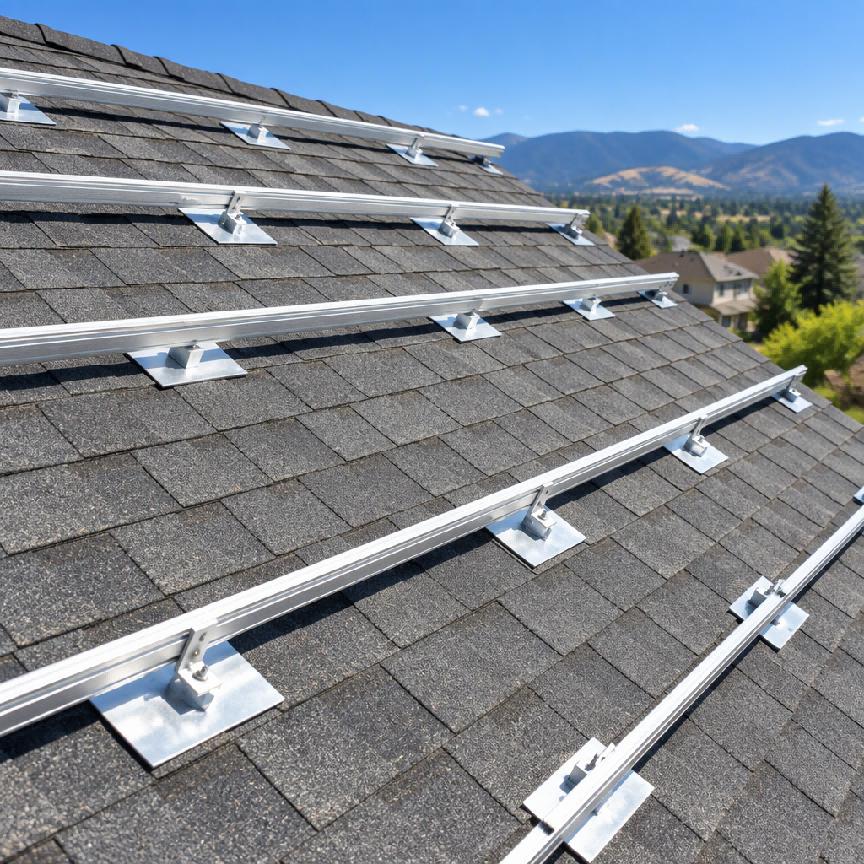
Preventing Roof Leaks: The Importance of a Waterproof Flashing Kit for Asphalt Shingle Roofs
Rooftop solar is one of the most popular renewable investments for homeowners and commercial property owners. Most of the conversation focuses on panel efficiency, inverter performance and racking strength, while one critical component is often overlooked: the waterproof flashing kit. Every mounting system requires penetrations through the roof surface, and each one is a potential entry point for water. Waterproof flashing seals those penetrations and keeps moisture out of the roof structure, preventing mold, rot and leaks. This article explains why flashing matters on asphalt shingle roofs and how to choose the right solution for your project.
Asphalt Shingle Roofs: A Large and Growing Solar Market
Asphalt shingle roofs are widely used in residential and light commercial buildings across North America, Europe and China. Their lightweight structure, dependable waterproofing and straightforward installation have made them a mature, high-potential market for solar projects. They are also one of the most common roof types for residential solar retrofits. Yet the penetrations needed to anchor the racking break the roof’s continuous water barrier, and sealing them with glue or sealant alone is not a durable answer: under UV exposure and repeated temperature cycling, such seals harden, crack and eventually fail.
What Is the Best Solar Panel Flashing Solution for Asphalt Roofs?
The most effective way to prevent leaks on an asphalt roof is to install high-quality flashing that creates a watertight seal around every roof penetration. Flashing does not work in isolation. It should be designed together with the roof attachments, sealants and installation method, so that the roofing system stays protected and the array remains safe over the long term, delivering clean energy without leak risk.
For most asphalt shingle applications, aluminum or stainless steel flashing installed under the upper shingle course and above the lower course provides reliable water diversion and lasting leak protection. Overlapping the existing shingles follows the same water-shedding principle as the roof itself, guiding rain and melted snow away from the drilled holes.
Why Asphalt Roof Solar Installations Are Vulnerable to Leaks
Asphalt shingle roofs shed water through overlapping layers. Solar mounting requires drilled penetrations that interrupt this continuous barrier. Water on an asphalt roof does not simply fall vertically; it travels along the slope, moves between shingle layers, and can enter even very small openings when flashing is missing or incorrectly positioned.
Poor attachment alignment is another common problem. When a lag bolt, L foot or roof hook is not fixed into the correct structural point, installers may over-apply sealant to compensate for a weak connection. Sealant alone is not a long-term waterproofing strategy: UV exposure, thermal expansion and moisture gradually weaken the bond and let water in.
These defects leave hidden gaps behind the shingles. Leaks usually develop slowly and go unnoticed until attic rot, mold or ceiling damage becomes visible. That is why a dedicated waterproof flashing kit is essential for every asphalt roof solar project.
How Solar Panel Flashing Works on an Asphalt Roof
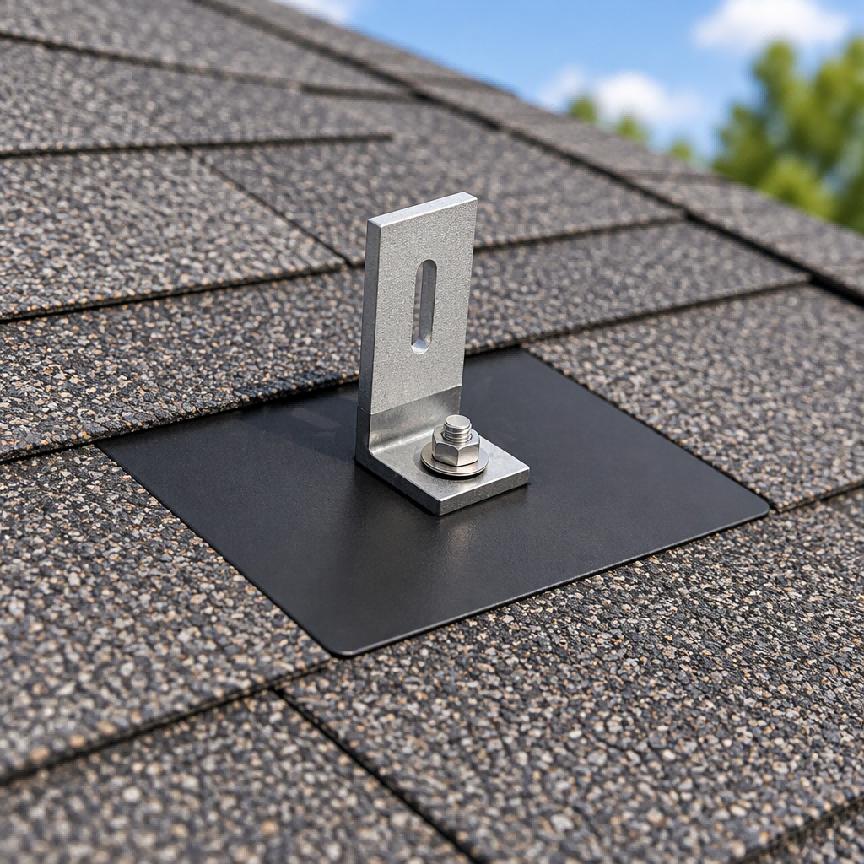
In a typical asphalt shingle mounting system, the flashing plate is inserted beneath the upper shingle layer and positioned over the lower shingle course. This overlap follows the roof’s natural drainage path, allowing water to keep flowing downward without ever reaching the penetration.
A correctly installed flashing system also supports the roof attachment above the waterproof layer. Rather than relying on sealant, the flashing acts as a physical barrier that guides rainwater around the mounting hardware. This is why flashing is considered one of the most important components in leak prevention for rooftop solar systems.
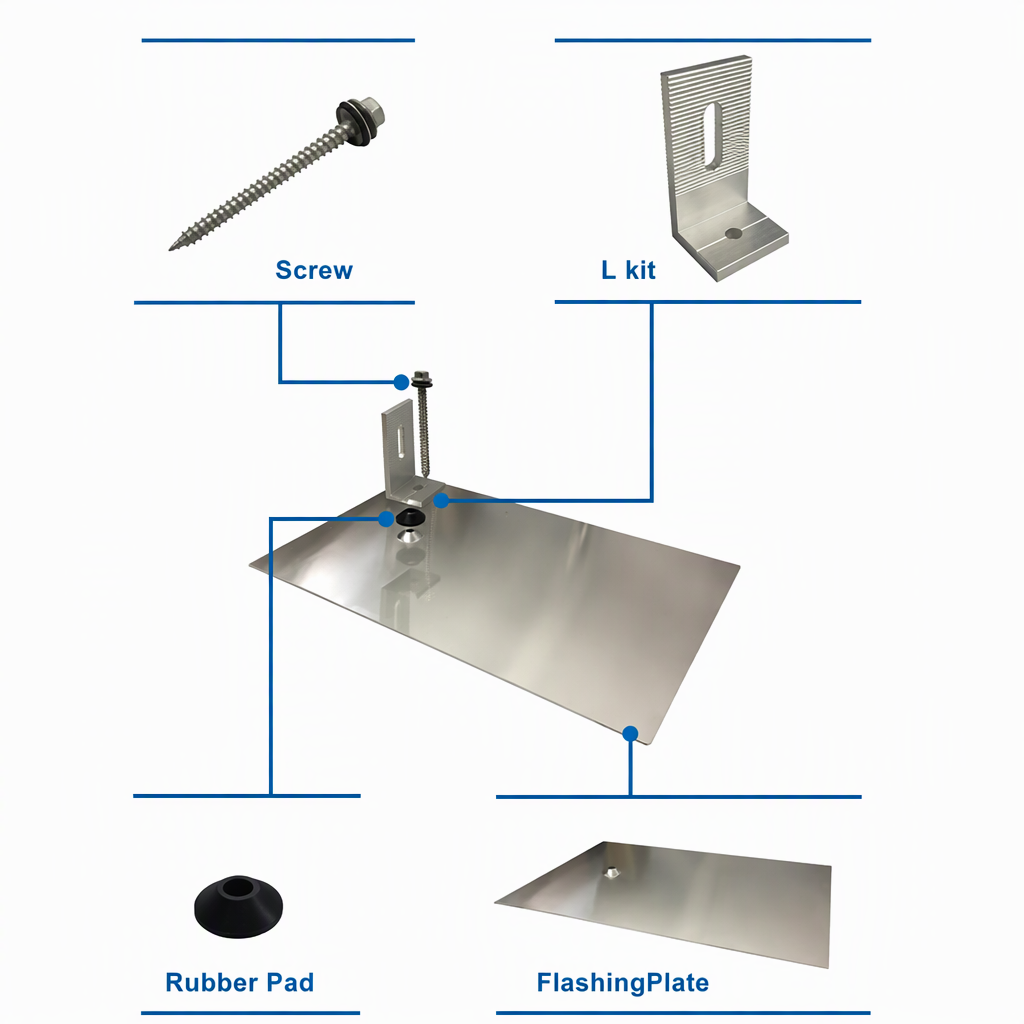
Choosing the Right Flashing Material
The material you choose has a direct effect on service life. Aluminum and galvanized steel are the two most common options for solar applications.
Aluminum is lightweight, corrosion-resistant, easy to form and cost-effective. Galvanized steel is strong and rigid, and its zinc coating gives it high resistance to rust.
For most residential projects, high-quality aluminum flashing offers an excellent balance of durability and value. In coastal areas or harsh weather environments, galvanized steel, or a more premium option such as stainless steel, may be preferable for superior corrosion resistance.
Conclusion
A solar array is only as reliable as the roof beneath it. Specifying the right waterproof flashing kit, installing it in the correct position and matching the material to the project environment are the simplest ways to protect the roof, the building and the investment for the life of the system.
To learn more about flashing kits and mounting solutions for asphalt shingle roofs, contact our team.

Universe Solar(UISOLAR) is a high-tech enterprise specializing in the development,manufacturing and marketing of PV mounting. With our top quality and service, UISOLAR mountings are welcomed by most of the installers, distributors, and EPC ect. all over the world.
Please read on, stay posted, subscribe, and we welcome you to tell us what you think.


 online service
 +86 (0592)5663849
 sales@uisolar.com
 solar-mount.au
 English
 français
 Deutsch
 русский
 español
 português
 Nederlands
 العربية
 日本語
 한국의
 IPv6 network supported